Let me say something that took me longer than it should have to fully understand.
You can have the most expensive products on the market, the most consistent wash day routine, and the most carefully curated natural hair regimen, and still struggle with growth, dryness, and breakage if you are neglecting your scalp.
Your scalp is not just the skin your hair sits on. It is the environment your hair grows from.
It is everything.
Once I started treating my scalp with the same attention I was giving my strands, my entire hair journey shifted.
If you have been focused on your hair and wondering why it still is not thriving, this is the conversation you need to have with yourself.
***Please note that this site uses affiliate links if you would like to read the legal stuff you can find it here
Your Hair Is Dead. Your Scalp Is Very Much Alive
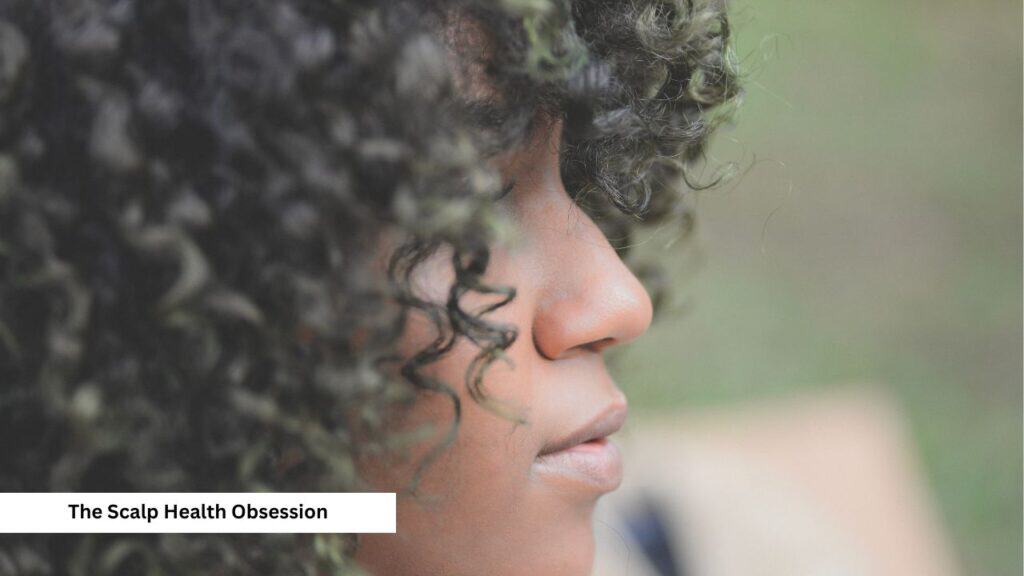
This sounds blunt but it is worth thinking about. The hair shaft, the part you see, touch, moisturise, and style is made of dead keratin cells. It cannot repair itself.
Damage to the strands of your hair is permanent but your scalp is living tissue, full of blood vessels, sebaceous glands, and hair follicles that are actively working to produce new growth every single day.
That is where your attention belongs. Not exclusively on the hair you already have, but on the scalp that is responsible for the hair still to come.
What Happens When You Ignore Your Scalp
A neglected scalp gives you signals. Most of us have learned to treat those signals as inconveniences rather than information.
Persistent itching, flaking, tenderness, and slow growth are not random. They are your scalp communicating that something is off.
Buildup from products, dry skin, excess sebum, fungal imbalance, or chronic inflammation can all interfere with the follicle’s ability to produce healthy hair.
When the environment around the follicle is compromised, the hair that comes from it is compromised too.
Thinning edges, weak new growth, hair that snaps close to the root, locs that feel heavy and dull, a lot of what gets blamed on the hair itself actually starts at the scalp.
The Buildup Problem Nobody Talks About Enough
If you use leave-ins, butters, oils, and styling products regularly, and most of us do, buildup is inevitable.
Product residue accumulates on the scalp over time, mixing with sebum and dead skin cells to create a layer of congestion that can literally block the follicle opening.
This is why clarifying is non-negotiable. Not your regular co-wash. Not your moisturising shampoo. An actual clarifying wash that removes buildup completely and gives your scalp a clean slate.
For most people this needs to happen every four to six weeks at minimum. If you are a heavy product user, more frequently.
Signs you need to clarify:
- Your scalp smells even after washing,
- Your hair feels heavy and coated,
- Your products are sitting on top of your hair rather than absorbing
- Your scalp is persistently itchy despite regular washing.
Scalp Massage, The Most Underrated Tool in Your Routine
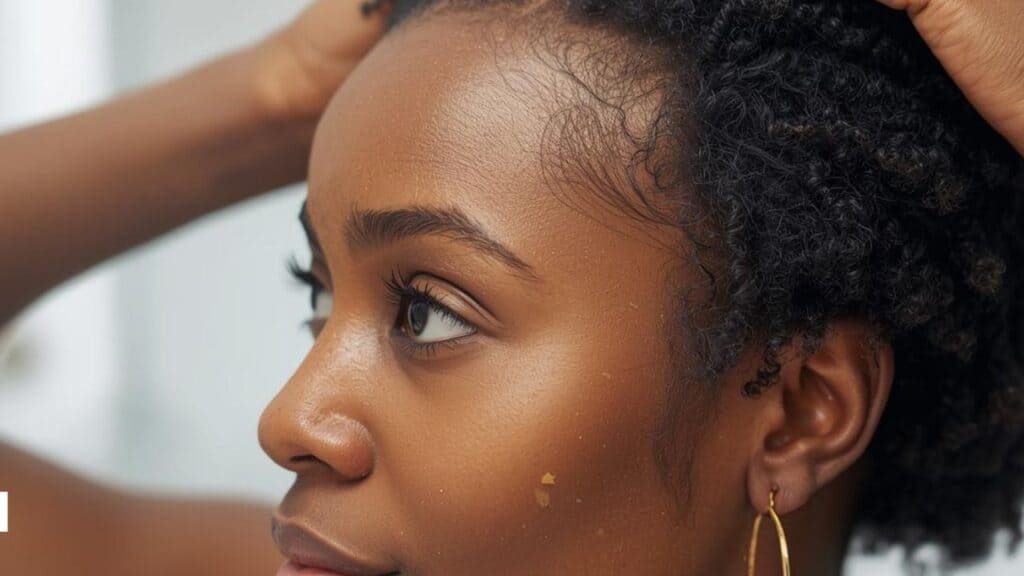
You do not need a product for this. You just need your fingertips and about five minutes.
Scalp massaging increases blood circulation to the follicles, which means more oxygen and more nutrients reaching the roots of your hair.
Studies have shown that regular scalp massage can increase hair thickness over time and support healthier growth.
More practically, it helps to loosen buildup, distribute natural oils, and reduce tension in the scalp which is especially important if you wear tight styles regularly.
Make it part of your routine.
Before a wash, during an oil application, or on its own while you are winding down in the evening. Do it consistently and your scalp will respond.
Oils Are Not All Equal and They Are Not All for Everyone
Scalp oiling is one of the most common practices in natural hair care, and it can be incredibly beneficial, when done right.
The problem comes when heavy, occlusive oils and butters are applied directly to the scalp in large amounts, trapping in buildup and creating the very congestion we are trying to avoid.
Lighter oils such as jojoba, which most closely mimics the scalp’s natural sebum, sweet almond, grapeseed, or peppermint-infused oils, are far more effective for scalp application.
They nourish without suffocating. If you have been oiling your scalp with castor oil or shea butter and wondering why things are not improving, this may be why.
Less is more.
A light application of the right oil, massaged in gently, is more effective than a heavy coating of the wrong one.
Scalp Conditions That Deserve Real Attention
Not every scalp issue is solved with a clarifying wash and a good oil. Some conditions require more targeted care, and sometimes professional input.
Seborrheic dermatitis, scalp psoriasis, and fungal conditions are more common than people realise, and they can be mistaken for simple dryness or dandruff for years.
If your scalp issues are persistent, severe, or not responding to changes in your routine, speak to a dermatologist. There is no award for struggling through something that can be properly treated.
Your scalp deserves the same level of care you would give any other part of your skin.
Building a Scalp Care Routine That Actually Works
It does not have to be complicated. A solid scalp care practice comes down to four things done consistently:
- Clarify regularly to remove buildup and start fresh.
- Massage often to stimulate circulation and support follicle health.
- Moisturise appropriately, keeping your scalp balanced, not dry and not over-saturated.
- Pay attention to what it is telling you and respond before small issues become bigger ones.
Your hair will follow the health of your scalp. When one thrives, so does the other. Stop treating your scalp as an afterthought. It has been doing the most important work all along.
Final Thoughts on Why Your Scalp is More Important Than Your Strands
The health of your natural hair can be drasticlly improved just by making some small adjustments to your natural hair routine. Its always best to focus on your scalp first before the strands of you hair. If you folow the steps laid out above you will definatly see an improvment in the overall health of your hair.
Related posts:
How to keep your scalp healthy, 7 tips!
The perfect hair wash routine, 8 steps
Washing hair in sections, the secret sauce!