Nobody starts a loc journey expecting their hair to struggle. You do the research, you find your loctician, you commit to the process, and you assume that as long as you are showing up for maintenance appointments, everything is fine.
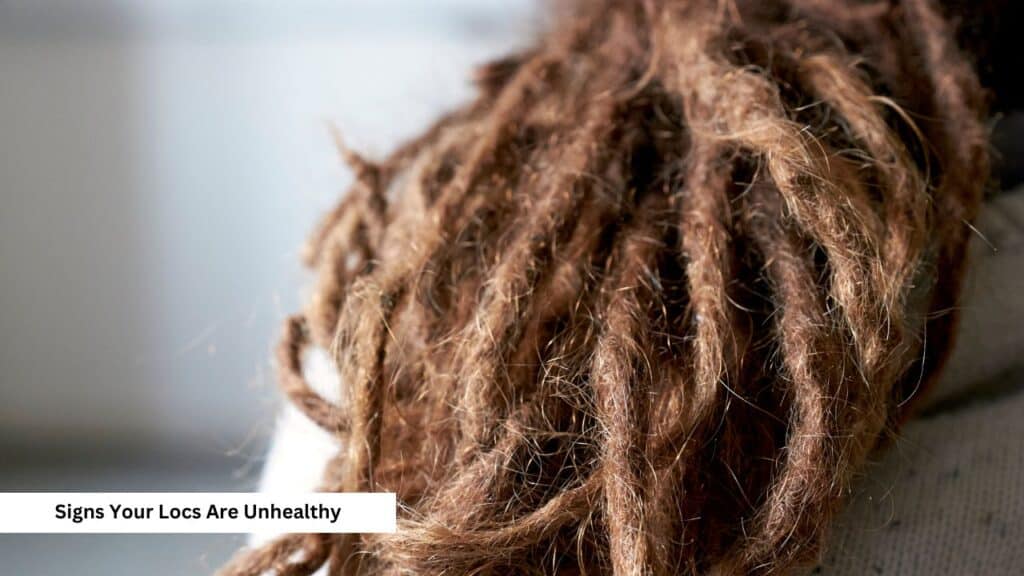
The thing is that locs can be quietly unhealthy for a long time before the signs become obvious, and because our hair is loced, it can feel harder to assess what is actually going on inside the strand. I have learned, through my own microloc journey, that you have to pay close attention because your locs will tell you everything if you know what to look and feel for.
Here are the signs that your locs are not as healthy as they could be, and the honest, practical steps to turn things around.
***Please note that this site uses affiliate links if you would like to read the legal stuff you can find it here
***Please note that this site uses affiliate links if you would like to read the legal stuff you can find it here
6 Signs Your Locs Are Unhealthy
1. Your Locs Feel Dry No Matter What You Put on Them
Dry locs are one of the most common issues and one of the most misunderstood.
A lot of people respond to dry locs by adding more product, more oil, more butter, more cream, and then wonder why nothing improves.
In most cases, dryness is not a product problem. It is a moisture problem, and those are not the same thing.
Oil does not moisturise. Water does.
If you are layering oils and butters onto locs that have not been properly hydrated first, you are sealing dryness in, not sealing moisture in.
The fix is going back to basics, water-based hydration first, followed by a light sealant.
A spray bottle with water and a small amount of aloe vera juice, used between wash days, will do more for dry locs than most products on the market.
If your locs have been dry for a long time, a deep moisture treatment on wash day with heat will help the hydration penetrate more effectively. Do this consistently for a few weeks before you assess whether things have improved.
2. You Have Significant Buildup
Buildup in locs is inevitable if it is not actively managed. Product residue, sebum, dead skin cells, and hard water deposits all accumulate inside and on the surface of your locs over time, creating a layer of congestion that makes your hair look dull, feel heavy, and smell stale even after washing. I’m sure you’ve experienced it from other people when you got a little too close.
The honest truth is that a lot of people are washing their locs without actually cleansing them. Conditioner-only washing, diluted product washes, or simply rinsing without proper lather, none of these remove buildup effectively.
A proper clarifying wash with a residue-free clarifying shampoo, worked through each section and rinsed thoroughly, is the only way to address this.
For microlocs especially, I recommend diluting your clarifying shampoo slightly and applying it directly to the scalp and along the locs, then rinsing in sections to make sure nothing is left behind.
If your buildup is significant, one clarifying wash may not be enough. Two sessions a week apart can help shift what has accumulated over time.
Going forward, clarify every four to six weeks at minimum. Do not wait until you can see or smell the problem.
3. Your Roots Feel Thin or Weak
Thin, fragile roots are one of the more serious signs that something has been wrong for a while. In most cases, this comes down to one of three causes: over-retwisting, retwisting too tightly, or both.
When the same point of your loc is manipulated repeatedly on a tight schedule, the hair at that junction weakens over time.
With microlocs, especially, where the sections are already fine by design, root thinning can progress quickly if the maintenance pattern is too aggressive.
The fix here requires two things: extending your retwist schedule and being honest with your loctician about the tension being applied.
If you are currently retwisting every two to three weeks, move to six to eight weeks. If your retwists regularly leave you with tenderness, headaches, or visible scalp stress, that tension needs to come down.
Healthy retwists should feel secure, not painful.
While your roots are recovering, a lightweight scalp oil massaged gently along the thinning sections a few times a week will support circulation and encourage the follicle to produce stronger new growth.
4. Your Locs Are Losing Their Shape or Unravelling
If established locs are unravelling at the ends or losing their structure mid-shaft, that is a sign of either excessive manipulation, chronic dryness, or a maintenance method that is not suited to your hair type.
For 4b hair in particular, which has a tighter, more angular curl pattern than 4c, locs can sometimes take longer to fully seal, especially at the ends, which are the last part to loc.
If your ends are consistently unravelling, they may need more time and less interference. Resist the urge to retwist unravelling ends too aggressively, as this can cause the loc to thin at that point. Instead, gently palm roll and allow them to dry fully before any manipulation.
If the unravelling is happening mid-shaft on locs that have been established for a long time, moisture imbalance and manipulation are the most likely culprits.
Revisit your wash day routine, reduce daily touching, and assess whether your retwist method is creating stress at the weak points.
5. Your Scalp Is Persistently Itchy, Flaky, or Inflamed
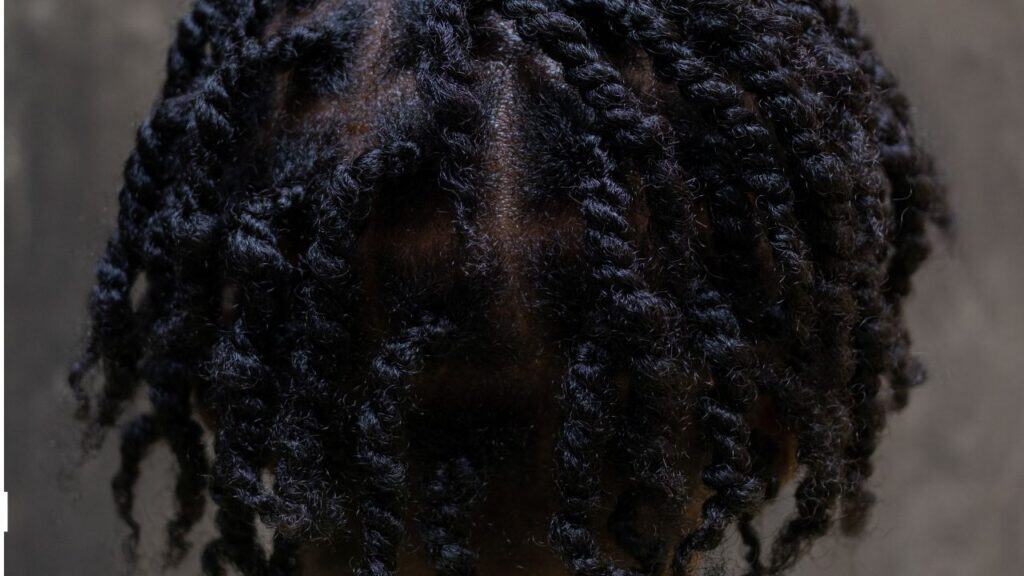
Scalp issues and loc health are directly connected. An inflamed, congested, or imbalanced scalp cannot produce healthy hair, and in the loc journey, scalp problems can be easy to overlook because the hair itself masks what is happening at the root.
Persistent itching, visible flaking between your locs, soreness at the scalp, or any kind of inflammation that does not resolve with regular cleansing warrants real attention.
It could be product buildup, a fungal imbalance, seborrheic dermatitis, or simple chronic dryness, each of which needs a different response.
Start by clarifying thoroughly and removing all product residue.
Switch to lighter products to avoid re-clogging the scalp. Incorporate a gentle scalp oil with tea tree or peppermint oil to soothe and rebalance.
If the issue persists despite these changes, please see a dermatologist rather than continuing to manage it alone. Your scalp is the foundation of your loc journey. It deserves proper care.
6. Your Locs Look Dull and Lifeless
Healthy locs have a natural sheen. Not a product-induced shine, that often signals buildup, but a quiet vitality that comes from well-moisturised, clean, nourished hair.
If your locs consistently look dull, flat, and lacklustre, start with a clarifying wash to rule out buildup.
If dullness remains after clarifying, the issue is moisture, specifically, your hair is not retaining enough of it between wash days.
This is where a consistent hydration routine between sessions matters.
Light water-based spritzing using a hair mist bottle like this one, gentle scalp oiling, and protective styling overnight to minimise moisture loss will all contribute to locs that look as healthy as they actually are.
Final Thoughts on Signs Your Locs Are Unhealthy
Healthy locs are not complicated, but they do require consistency.
A clean scalp, adequate moisture, appropriate tension, and enough time between manipulation.
These four things address the vast majority of loc health issues before they become serious.
If your locs are showing more than one of these signs right now, start with the scalp and work outward.
Clarify, hydrate, extend your retwist schedule, and give your hair time to respond before you layer in anything else. Simple, consistent, and patient will always win.
Your locs want to thrive. Sometimes they just need you to get out of their way.
Related posts:
The truth about microlocs shedding
Best sprites for daily loc moisture
Signs your locs are dehydrated