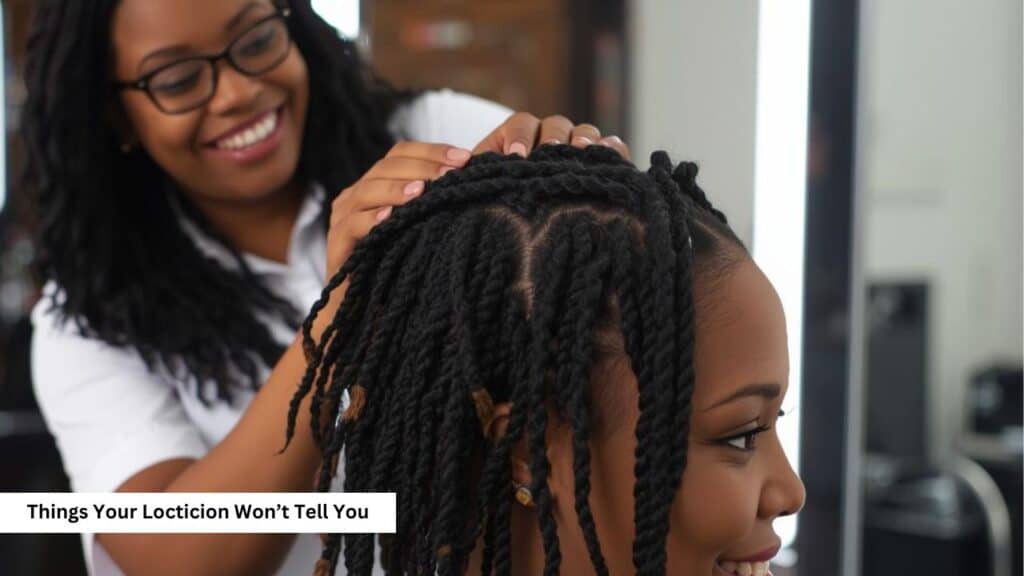
Let me be clear before we get into this: most locticians are skilled, dedicated, and genuinely passionate about what they do. This is not a drag. This is not a callout. This is the honest, practical information that often gets left out of the chair conversation, either because there isn’t enough time, because it’s awkward to bring up, or because some things are simply assumed.
You deserve to know these things, especially if you’re new to this journey, considering locs for the first time, or trying to figure out why your hair isn’t thriving the way you expected.
***Please note that this site uses affiliate links if you would like to read the legal stuff you can find it here
Here Are 21 Things Your Loctician Probably Won’t Tell You, But Really Should
Before You Even Sit in the Chair
1. Your Starting Hair Health Matters More Than You Think
Locs lock in whatever condition your hair is in when you start. Damaged, dry, or over-processed hair doesn’t magically improve once it’s loced. If your hair needs a reset before you begin, take that time. Even if it needs a trim, do it. Doing these things before installation will give you better quality locs for the future. You’ll thank yourself later.
2. Your Loctician’s Preferred Method May Not Be The Best One For Your Hair
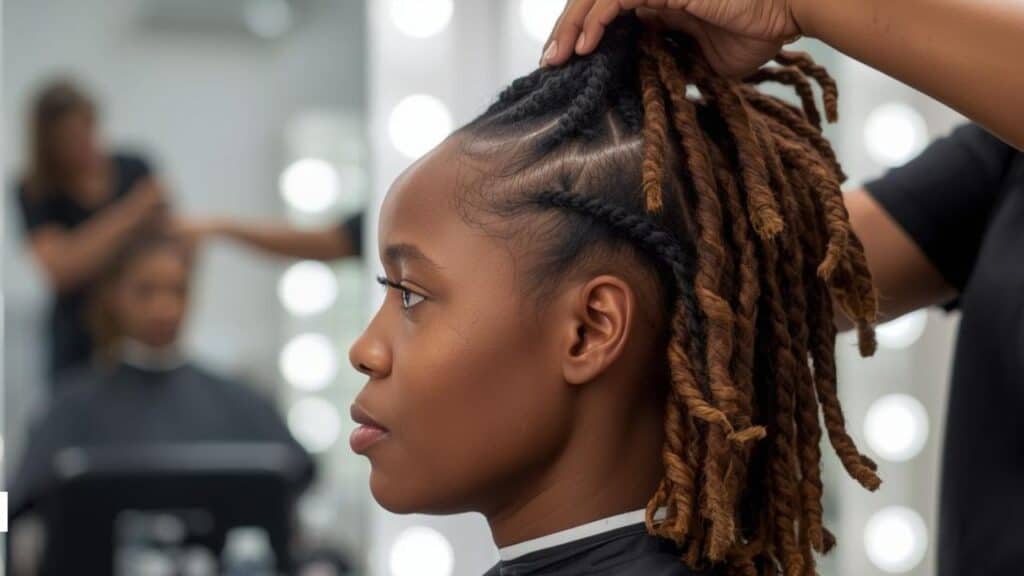
Two-strand twists, interlocking, comb coils, and palm rolling, each of these methods works differently depending on your hair type, density, and lifestyle. I started my locs with 2 strand twists, but that method didn’t work so well for my daughter as she had a completely different hair type, which was a lot looser than mine. Braids worked better for her hair type as they wouldn’t unravel so easily.
Don’t be afraid to ask why a particular method is being recommended for you specifically.
3. Cheap Installs Often Come At A Cost
A low starter loc price can mean rushed work, poor sectioning, or uneven sizing. Your sections determine the foundation of your entire loc journey. It’s worth investing in a skilled hand from the beginning.
4. You Should Know What Products Are Going Into Your Hair
Heavy waxes and butters are still used in some salons for installations, and they can cause serious buildup that is incredibly difficult to remove. Ask what products will be used before your appointment, not after. This will give you better insight into the practices they use.
5. A Consultation Should Be Standard, Not Optional
If a loctician is willing to start your hair without asking about your hair history, your goals, or your lifestyle, that’s a red flag. A good professional will want that context before they begin.
During the Retwist and Maintenance Phase
6. Over-Retwisting is One of The Most Common Causes of Loc Thinning
Retwisting too frequently puts repeated tension on the same point of your locs, which can cause thinning at the root over time. Most hair does well with a four to six week maintenance schedule, but your loctician may not push back if you want to come in more often.
7. Tight Retwists Are Not The Same As Neat Retwists
There is a real difference between a clean, controlled retwist and one that’s pulled so tightly it causes headaches or leaves your edges tender for days.
That tension is not a sign that it was done well. It’s a sign it was done too tightly.
8. Your Locs Should Not Hurt After A Session
If you’re regularly leaving the salon in discomfort, that is worth addressing. Traction alopecia is a real risk, and it is preventable.
9. Product Buildup is Cumulative
Every product that goes onto your locs during maintenance adds up over time. If clarifying washes (purchase here) aren’t part of your routine conversation, bring it up. Buildup is one of the leading causes of dull, heavy, slow-growing locs.
10. Your Scalp Needs Attention Too
Locticians are focused on the locs themselves, but your scalp health drives everything. If you’re not having regular conversations about scalp care, dryness, flaking, itching, or congestion, you’re missing a critical piece of the picture.
11. Not All Retwist Methods Work For All Hair Types
Interlocking is excellent for fine or silky hair but can cause grid marks and damage if overused on coarser textures. Palm rolling may not hold as well for very coily hair. Make sure the method being used on you is suited to your actual hair.
12. Your Locs May Be Uneven And That’s Okay To Address
Sizing inconsistencies, sections that have shifted, or locs that have combined over time are all common. Many people don’t know they can ask for a re-evaluation or corrective session. You can.
What Happens Between Appointments
13. Moisture Is Your Responsibility Between Sessions
Your loctician can give you a beautiful retwist, but they cannot control what happens to your hair for the next four to six weeks. Dry locs break. Learn how to moisturise properly between appointments water-based products first, sealed with a light oil.
14. You Do Not Need To Retwist New Growth Immediately
New growth is not a problem. It is your hair doing exactly what it should. The pressure to retwist the moment you see growth can lead to over-manipulation. Give your hair room to breathe.
15. Loc Envy is Real But Rarely Useful
Your loctician may show you results from other clients, and it’s easy to start comparing your timeline to someone else’s. But their hair is not your hair. Their journey is not your journey. Comparison is the fastest way to lose appreciation for your own progress.
16. Freeform is A Legitimate Choice
If you choose to go freeform, allowing your locs to grow and merge organically without regular retwisting, that is a valid, beautiful, intentional path. Some locticians will discourage it simply because it means fewer appointments. Know that it is a real option if you like it.
17. Your Diet and Water Intake Affect Your Locs
This rarely comes up in the salon, but it’s true. Hair growth, scalp health, and overall loc vitality are directly connected to how well you’re nourishing your body.
What you eat and drink shows up in your hair.

The Business Side of Your Loc Journey
18. You Are Allowed To Ask For A Price Breakdown
Installation, retwist, scalp treatment, and styling should not be a mystery. Know what you’re paying for and don’t be afraid to ask for clarity before your appointment.
19. A Loctician Who Won’t Answer Your Questions is Not The Right Fit
You should feel comfortable asking about technique, timing, products, and aftercare. If your questions are dismissed or your concerns are minimised, trust that feeling and keep looking.
20. You Can Switch Locticians
If you’re not happy with your results, your scalp health has declined, or you simply don’t feel heard, you can leave. Loyalty is admirable, but not at the expense of your hair or your peace of mind.
21. The Best Thing You Can Learn is Your Own Hair
No loctician, no matter how skilled, will ever know your hair the way you can. Pay attention to how it responds to products, to manipulation, to the seasons.
The more you understand your own hair, the better every appointment will be, and the more confidently you’ll navigate this journey.
Final Thoughts on What Your Loctition Wont Tell You
Your loc journey belongs to you. The more informed you are when walking into that salon chair, the better your experience and your results will be. Advocate for your hair. Ask the questions. And never stop learning.
Personally, I like to retwist my own hair every now and again for different reasons. Sometimes I just like to do it so that I can stay on top of how my hair is behaving and what individual locs are doing. Other times I do it because I’m in a situation where I don’t have access to a loctition so I want to be able to stay on top of my own hair and how to manage it.
This isn’t for everyone, but the point here is to know your own hair and understand that your journey is your own.
Related posts:
Best spritzes for daily moisture for locs
The Loc Glow Up – What No One Tells You
9 Things to know before getting your starter locs installed